
Chợ Lớn – the name means “Big Market” has been the heart of Saigon’s Chinese community for over three centuries. More than a district, it is a world unto itself: where Teochew, Cantonese, Hokkien, and Hainanese dialects still echo through temple courtyards, where traditional medicine shops preserve knowledge passed down through generations, and where the rhythm of life follows customs that predate the city around it. Here is how to experience its soul.
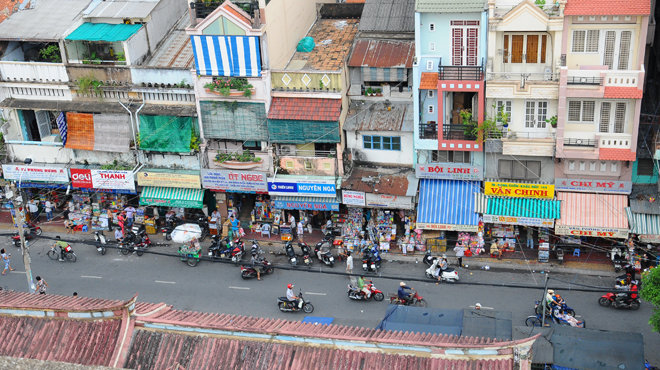
The heritage walk route
Begin at Chợ Lớn Market (Bình Tây Market), the district’s historic commercial heart. Unlike the tourist-focused Bến Thành, this market serves the community, stalls overflow with dried seafood, exotic herbs, and cooking equipment used in Chinese-Vietnamese kitchens. The market’s central courtyard features a statue of Quách Đàm, the Teochew merchant who funded its construction. Arrive at dawn to witness wholesale trading at its most intense.
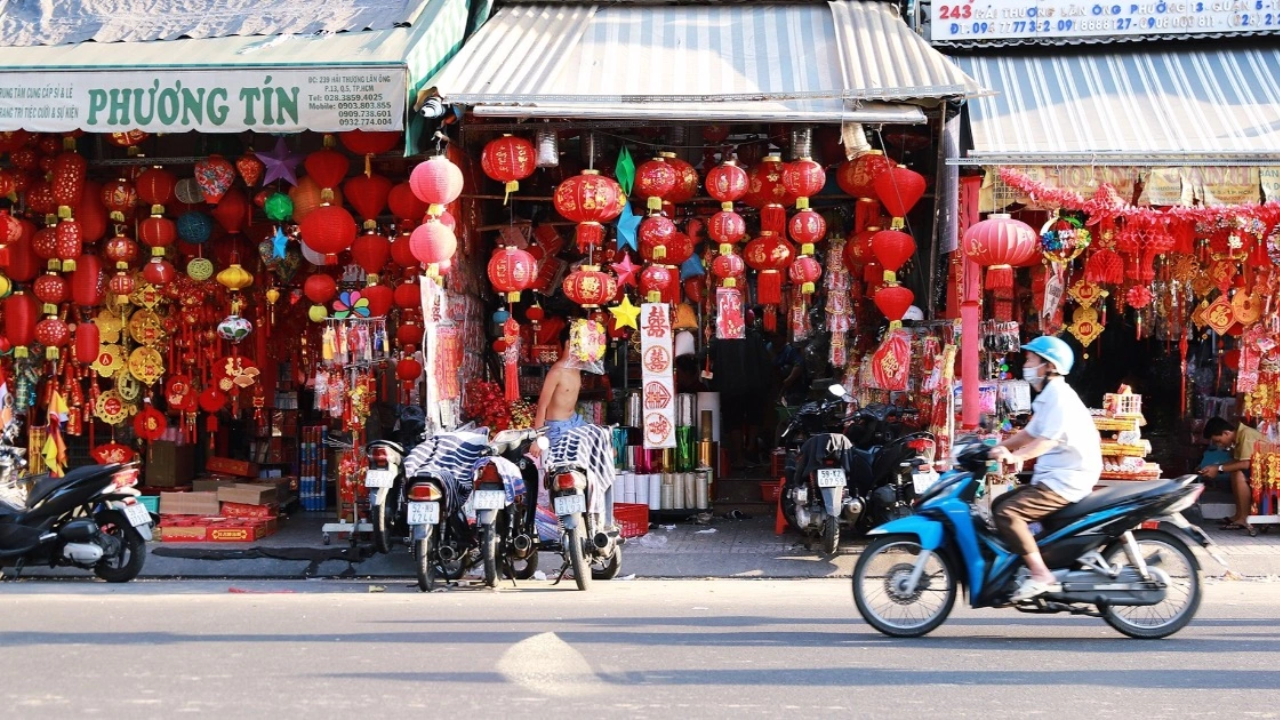
From the market, walk east along Hai Thượng Lãn Ông Street, named for the Vietnamese physician who systematized traditional medicine, fittingly, as this street remains the epicenter of herbal medicine in Saigon. Shops here have operated for generations, their wooden cabinets filled with ginseng, lingzhi mushrooms, and remedies whose formulas are guarded like family treasures.
Ancient temples
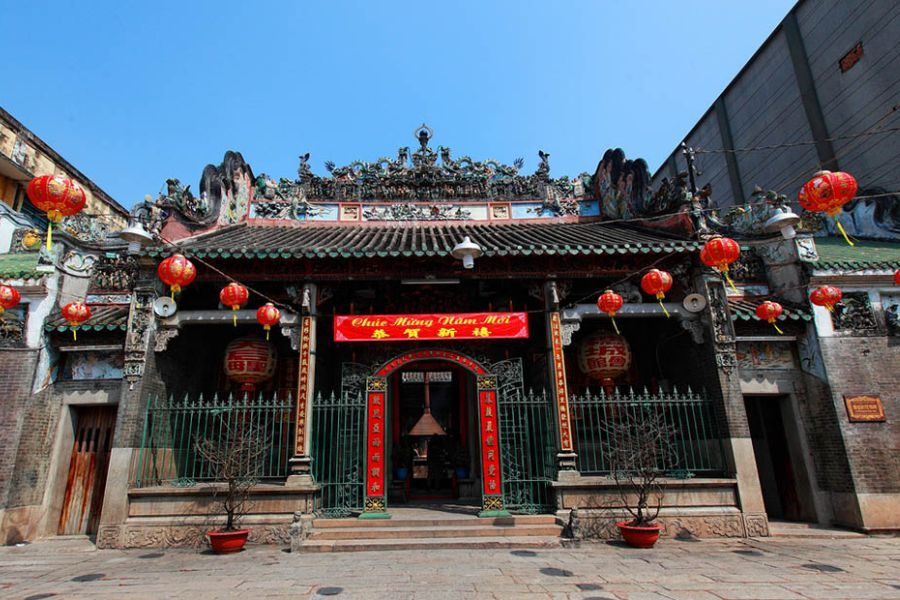
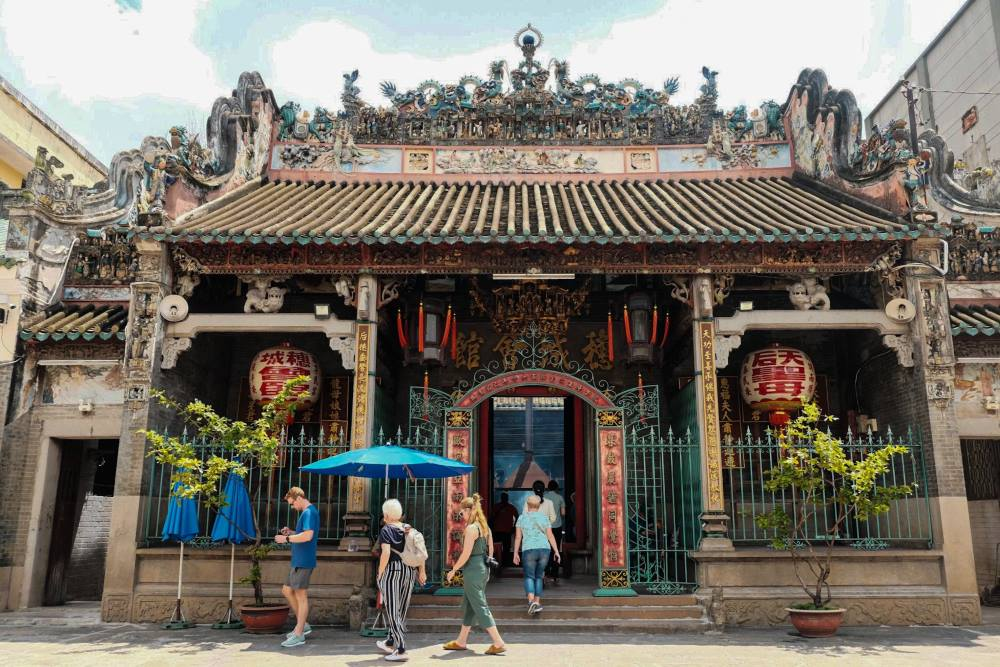
Chùa Bà Thiên Hậu (Ba Thien Hau Temple) on Nguyễn Trãi Street is the district’s most revered site. Built in 1760 by Cantonese immigrants, the temple honors the sea goddess who protects sailors. The ceiling features intricate dioramas depicting scenes from Chinese opera, unusual and exquisite. What makes this temple extraordinary is its living devotion. Smoke from enormous coils of incense hangs perpetually in the air. Worshippers arrive throughout the day, their offerings of fruit and flowers accumulating on altars worn smooth by centuries of prayer.
Hội Quán Quỳnh Phủ (Quynh Phu Assembly Hall) lies hidden on Đường Lão Tử Street. Built by the Hainan community in the 19th century, its courtyard features a miniature landscape of rock formations and koi ponds. The temple’s rear altar honors 107 Hainan merchants killed in a piracy incident, a reminder of the dangers faced by those who made the journey south. This assembly hall receives fewer visitors, offering moments of genuine stillness.
Hội Quán Ôn Lăng (On Lang Assembly Hall) on Lão Tử Street honors the scholar-general Khổng Tử. Unlike the ornate Cantonese temples, this Fujian-built hall emphasizes simplicity and scholarship. The gardens here are the district’s finest, a rare pocket of quiet where bamboo and stone create a space for reflection amid the neighborhood’s constant energy.
Hội Quán Nghĩa An (Nghia An Assembly Hall) on Nguyễn Trãi showcases the Teochew community’s contribution to Chợ Lớn. The rooftop features extraordinary ceramic mosaics depicting scenes from Chinese mythology. Inside, a statue of the goddess Quan Am presides over an altar perpetually layered with offerings. The temple’s courtyard serves as a gathering place where elders play Chinese chess and children run among the incense coils.
Traditional medicine shops
Tuệ Tĩnh Đường on Hai Thượng Lãn Ông Street represents the district’s pharmaceutical heritage. Operating since 1948, its facade features hand-carved wooden panels depicting medicinal plants. The interior reveals a museum-like collection of antique scales, grinding stones, and porcelain medicine jars. The current generation continues to prepare formulas using traditional methods. Visitors can observe the weighing and wrapping of herbs, a ritual unchanged in its essentials for generations.
Phước Hưng on the same street specializes in ginseng and bird’s nest. The shop’s wooden cabinets, darkened by age and incense, contain products sourced from across Southeast Asia. The owners can explain the properties of various ginseng types, the preparation of bird’s nest, and the philosophy underlying Chinese medicine. Even if purchasing nothing, the education in traditional healing systems proves invaluable.
Lão Trung Y offers consultations alongside herbal sales. For those curious about traditional diagnostics, practitioners may demonstrate pulse-reading and tongue examination, methods developed over millennia. The shop’s interior, with its wall of labeled drawers and scent of dried herbs, transports visitors to another era.
Cultural landmarks
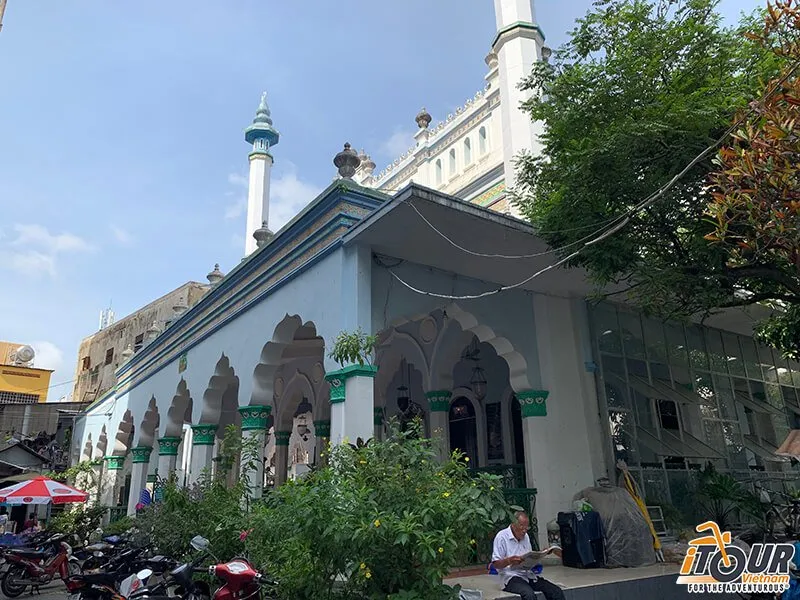
Chợ Lớn Mosque on Nguyễn Biểu Street reveals a lesser-known dimension of the district’s history. Built in the 1930s by Tamil Muslims who arrived as traders and textile merchants, this mint-green mosque remains active. The surrounding streets once housed a significant South Asian community whose influence persists in the district’s fabric, a reminder that Chợ Lớn has always been more than Chinese alone.
Phước An Hội Quán on Trần Hưng Đạo Boulevard serves as a cultural center for the Cantonese community. Beyond the temple space, the building hosts language classes, cultural events, and the district’s most respected lion dance troupe. During Lunar New Year and temple festivals, the courtyard erupts with drumming and acrobatic performances that draw crowds from across the city.
What to taste
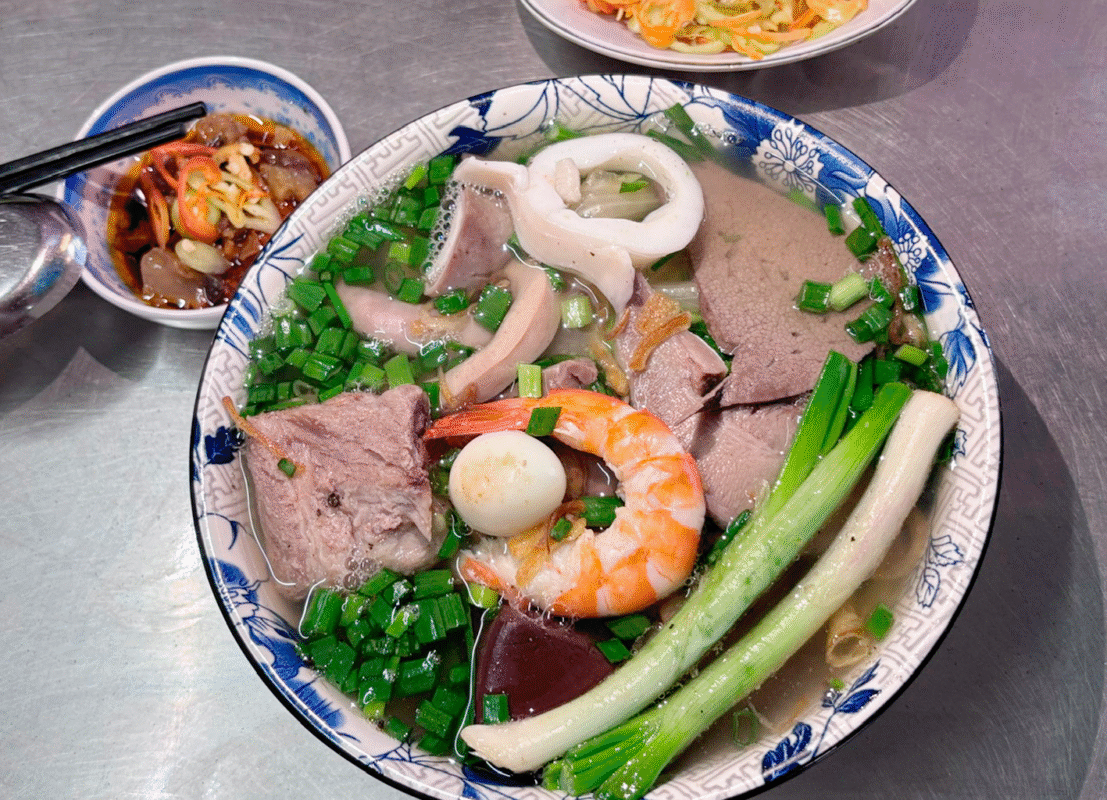
Chợ Lớn’s culinary traditions reflect its Chinese heritage adapted to Vietnamese ingredients. Hủ tiếu Nam Vang (Phnom Penh-style noodles) originated here, the version at Hủ tiếu Mỹ Tho on Hải Thượng Lãn Ông represents the district’s definitive interpretation. Bánh bao (steamed buns) from Tiệm Bánh Bao Bình Tây emerge from bamboo steamers filled with pork, egg, and Chinese sausage, breakfast for generations of market workers.
For dessert, chè shops in the district offer varieties unseen elsewhere: black sesame soup, ginger-infused tofu pudding, and longan seed sweet soup. Chè Thưng on Phùng Hưng Street serves these traditional preparations in a space that has changed little since the 1970s.
Practical guide
Timing: Start early. The district awakens around 5:00 AM when markets receive deliveries. Morning offers the most authentic experience, temple activity peaks, medicine shops open, and the neighborhood hums with purpose. Afternoons bring heat and quiet. Evening transforms the streets as families gather and night markets appear.
Getting there: Chợ Lớn lies in District 5 and District 6, about 20 minutes by taxi from central Saigon. Ride-share apps deliver directly to Bình Tây Market. The district is walkable but sprawling, wear comfortable shoes and carry water.
Language: Cantonese and Teochew remain common, though most residents speak Vietnamese. English is limited. Learning a few Vietnamese phrases or using a translation app enhances the experience.
Photography: Temples welcome photography but require respect, avoid flash, never point cameras at worshippers during prayer, and ask before photographing altars. Medicine shops often permit interior photos if you engage with owners first.
Chợ Lớn does not reveal itself quickly. Its soul resides in the accumulation of details: the sound of mahjong tiles from an open doorway, the scent of burning incense trailing through narrow lanes, the sight of an elderly woman selecting herbs from a drawer labeled with Chinese characters. Walk slowly. Let the streets guide you. And understand that in this corner of Saigon, history is not preserved behind glass, it lives in the daily rituals of a community that has called this place home for three centuries.
