
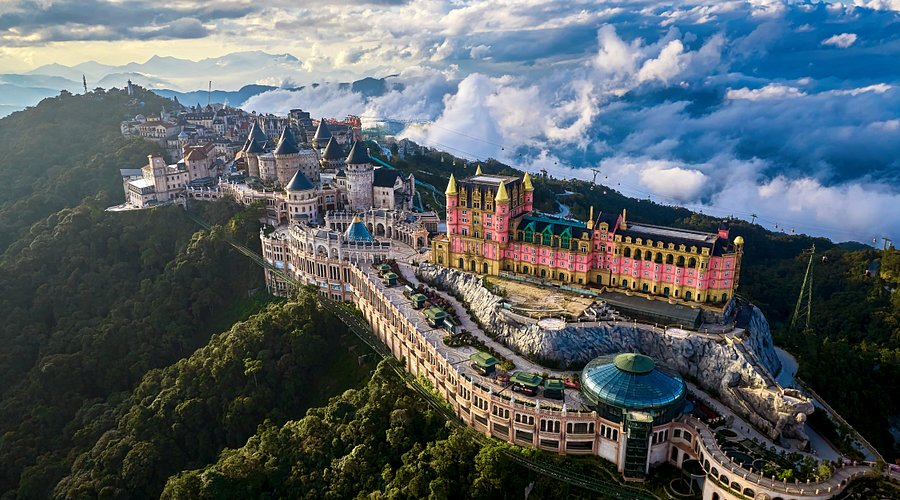
The Golden Bridge commands the spotlight, but Bà Nà Hills holds far more than its famous hand-cradled walkway. This former French hill station, perched 1,487 meters above sea level, offers layers of history, architecture, and natural beauty that most visitors rush past. Here are the hidden spots worth seeking out.
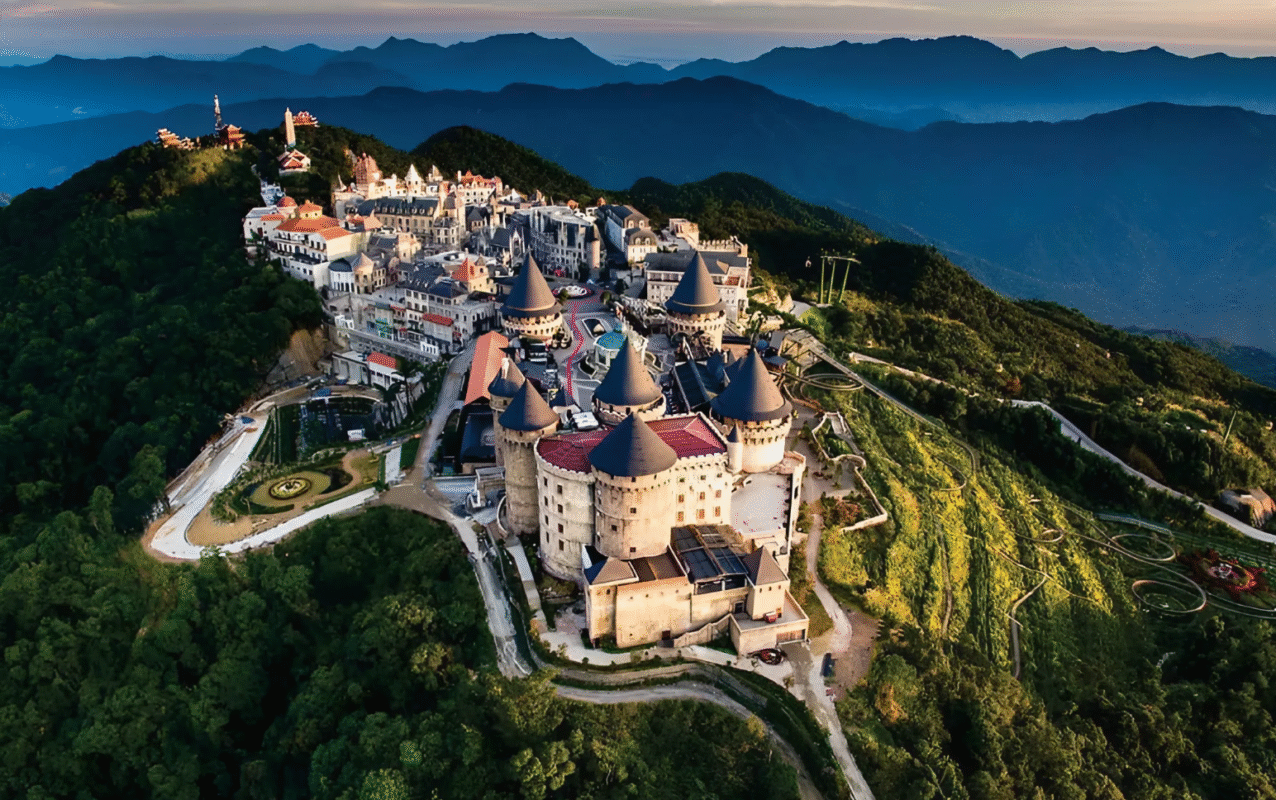
Debay wine cellar: A century underground
While crowds queue for the Golden Bridge, few venture into the mountain itself. Carved into the granite hillside in 1923 by French colonists, the Debay Wine Cellar remains remarkably intact, a cool, subterranean labyrinth where wine once aged at consistent temperatures ideal for preservation.
The tunnel opens into vaulted chambers where original stone walls still bear the marks of pickaxes. Antique barrels sit in alcoves; a tasting room offers local wines that connect visitors to the site’s history. Above the cellar, the crumbling foundations of French villas emerge from the forest, remnants of a colonial retreat abandoned during the war.
What to know: The cellar sits near the cable car station, often overlooked by visitors heading straight for the Golden Bridge. Morning visits offer solitude before the crowds discover it.
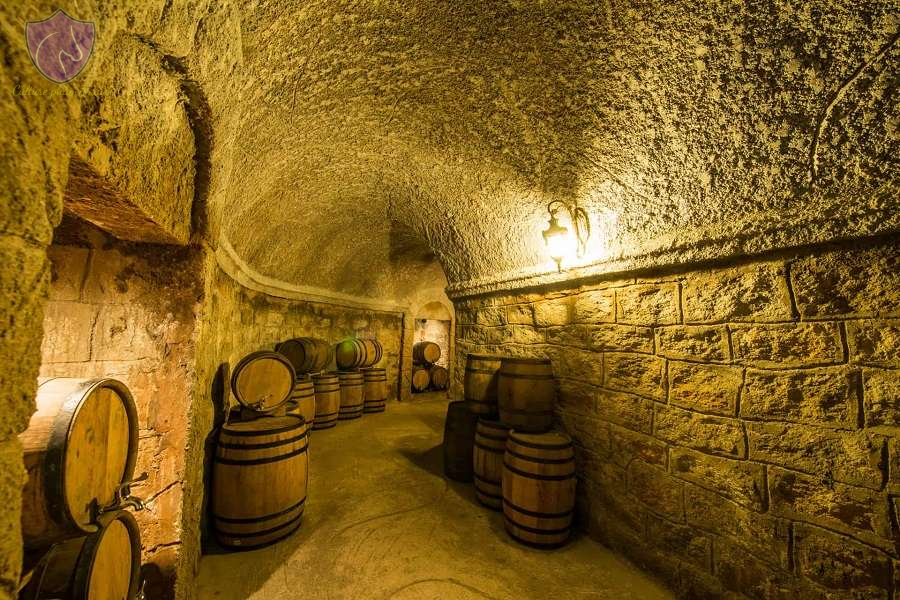
Le Jardin D’Amour: The forgotten gardens
Most visitors pass through Le Jardin D’Amour’s entrance without exploring its full extent. Beyond the central flower displays lie nine distinct gardens, each themed around a different mood or season. The Secret Garden remains the true discovery, tucked behind stone walls, this shaded courtyard features moss-covered fountains and benches where French colonists once took afternoon tea.
The European Garden replicates a formal French landscape, while the Meditation Garden offers bamboo groves and stone paths that attract few visitors despite their beauty. The gardens bloom year-round, but spring (February–April) brings the most spectacular displays.
What to know: The gardens occupy a large area east of the main square. Most visitors spend 20 minutes here; allowing an hour reveals the quieter corners where the colonial atmosphere lingers.
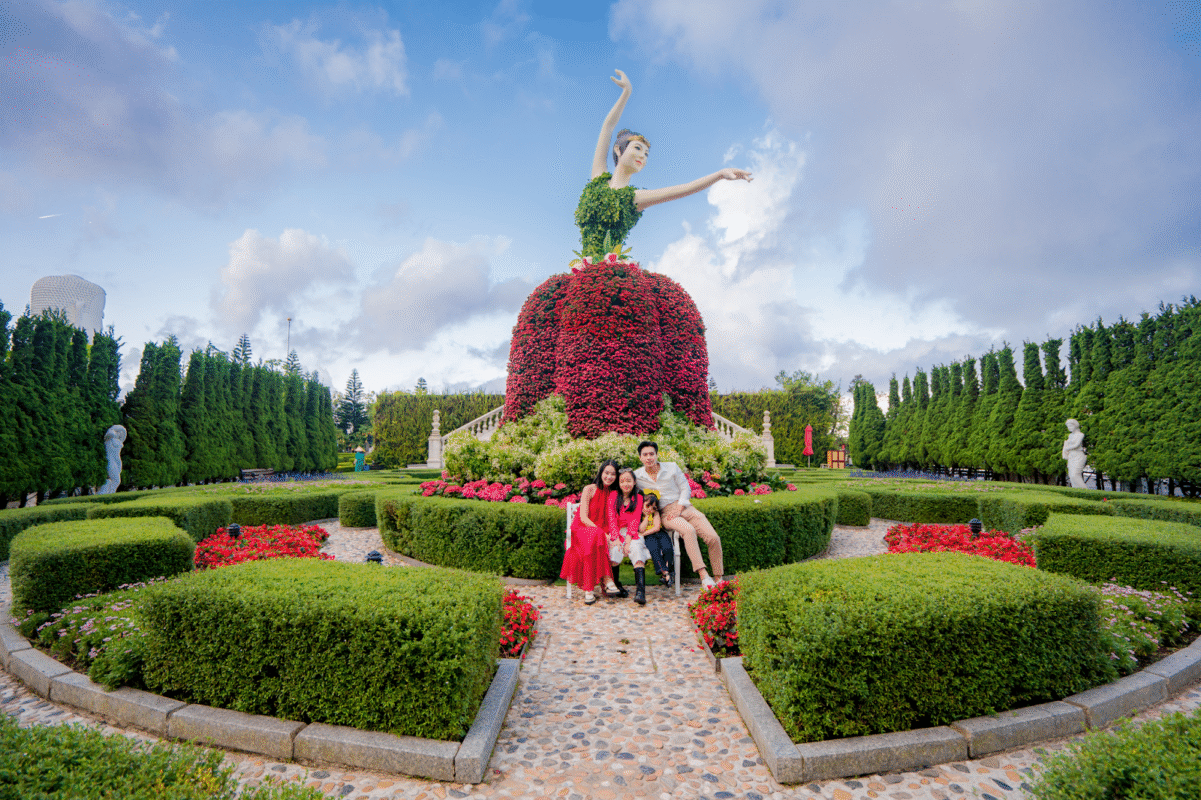
The Old French village ruins
Bà Nà Hills was established in 1919 as a hill station for French officials escaping the coastal heat. At its peak, over 200 villas, hotels, and administrative buildings dotted the mountain. Today, only fragments remain, but they tell a story the reconstructed French Village cannot.
Behind the modern developments, follow the path marked “Ancien Village.” Here, moss-covered stone walls emerge from forest undergrowth. Crumbling staircases lead nowhere. A small chapel, its roof long collapsed, still holds traces of painted murals. These ruins receive almost no visitors, offering a quiet counterpoint to the manicured French Village above.
What to know: The ruins require walking on uneven paths. Sturdy shoes recommended. Morning light filters beautifully through the forest canopy onto the stone remnants.
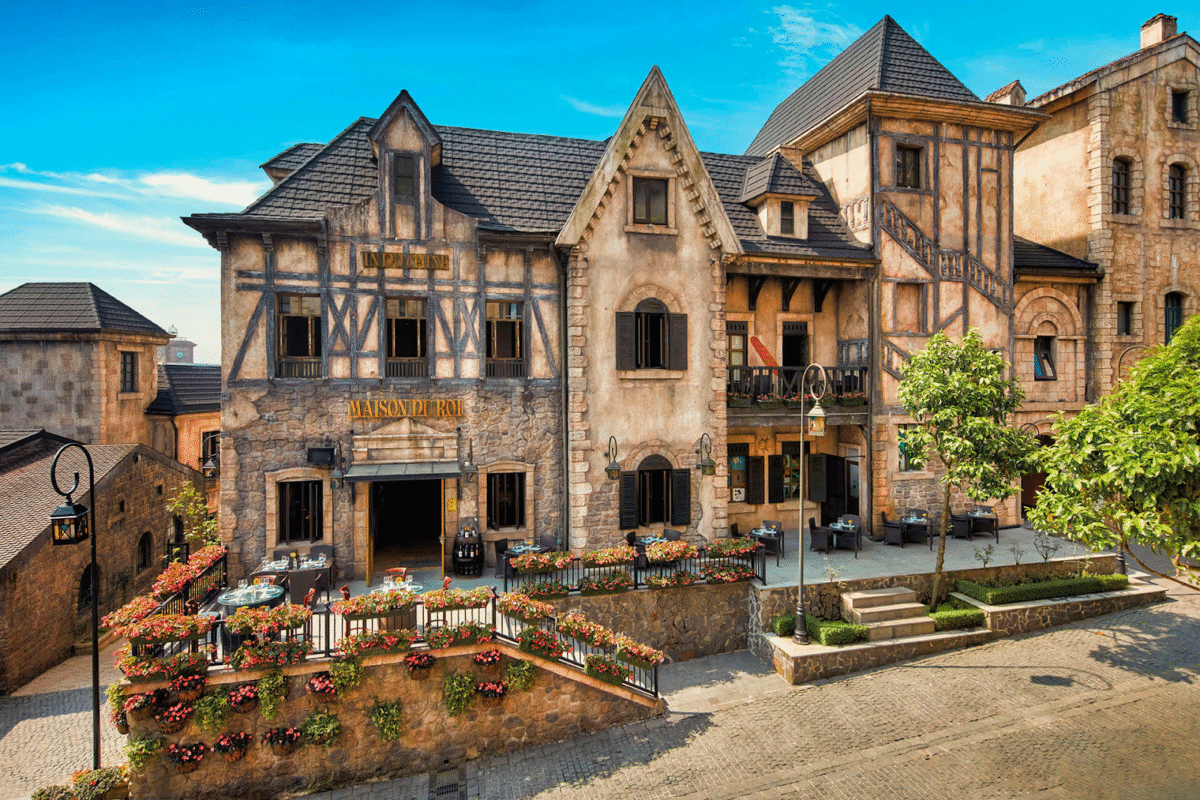
The peak of Vọng Nguyệt hill
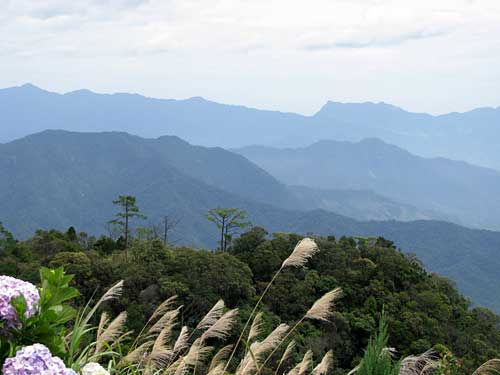
While most visitors stop at the main square, a short uphill walk leads to Vọng Nguyệt Hill – the highest point in Bà Nà Hills. The view from here surpasses the Golden Bridge’s perspective: the entire complex spreads below, cable cars cross the valley, and on clear days, the coast of Đà Nẵng appears as a silver line on the horizon.
A small pagoda occupies the summit, rebuilt on the foundations of a French-era observation post. Few visitors make the climb, making this the ideal spot for sunrise or late afternoon stillness.
What to know: The path begins near the French Village’s eastern gate. The climb is brief but steep; allow 15 minutes.
Linh Ứng Pagoda: Beyond the main temple
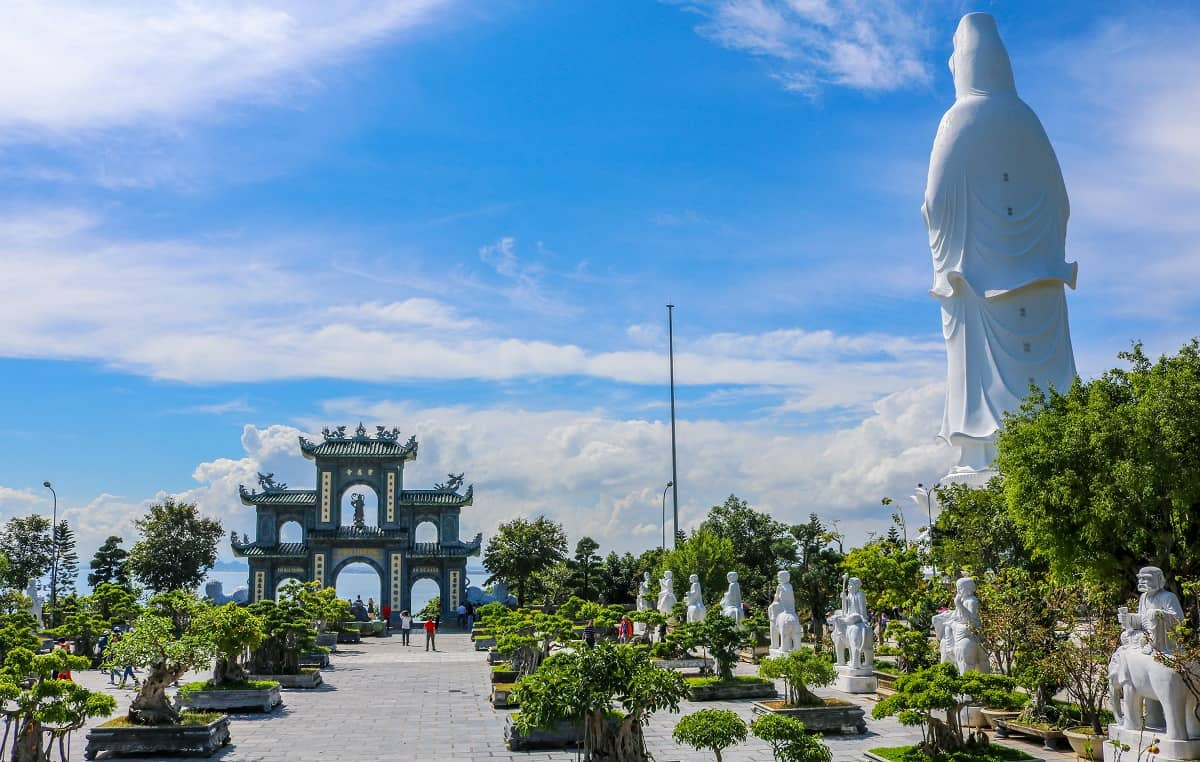
Bà Nà Hills features two Linh Ứng pagodas, the massive temple near the cable car station and a smaller, quieter version hidden in the forest. The lesser-known pagoda sits at the end of a stone path lined with bodhi trees, its architecture simpler, its atmosphere more contemplative.
Here, a giant Buddha statue gazes over the mountains. The surrounding terrace offers panoramic views without the crowds that gather at the main temple. Monks occasionally chant in the late afternoon, their voices echoing across the valley.
What to know: The hidden pagoda lies beyond the Debay Cellar, accessible via a marked trail. Visit during the 4:00 PM chanting for the most atmospheric experience.
Practical tips for going beyond
Timing: Most visitors arrive between 9:00 AM and 2:00 PM. To experience Bà Nà Hills beyond the Golden Bridge, arrive with the first cable car (7:30 AM) or stay until the last (5:30 PM). The ruins, hidden pagoda, and Vọng Nguyệt Hill are emptiest in the first two hours of operation.
Route: Skip the Golden Bridge initially. Begin at the Debay Cellar, explore the hidden pagoda, climb Vọng Nguyệt Hill, then walk the ruins before the crowds arrive. Visit the Golden Bridge after 10:00 AM if you must, but the secret spots deserve your morning attention.
Stay overnight: Bà Nà Hills offers limited overnight accommodation. A stay allows evening exploration when day-trippers have departed. The French Village after dark, lit only by lanterns, evokes the colonial era more authentically than any daytime visit.
Bà Nà Hills offers more than a viral photograph. Its layers, French colonial ambition, wartime abandonment, modern reinvention, reveal themselves to those who wander beyond the bridge. The golden hands will always be there. But the mountain’s soul resides in its forgotten gardens, crumbling ruins, and quiet peaks. Seek them out.
