
At the very heart of Hanoi lies Hoàn Kiếm Lake, a shimmering emerald mirror that reflects not only the city’s skyline but its soul. For centuries, this sacred body of water has been the gathering place, the breathing space, and the compass point around which the capital orients itself. Here is your guide to walking its shores at the moments that matter most.
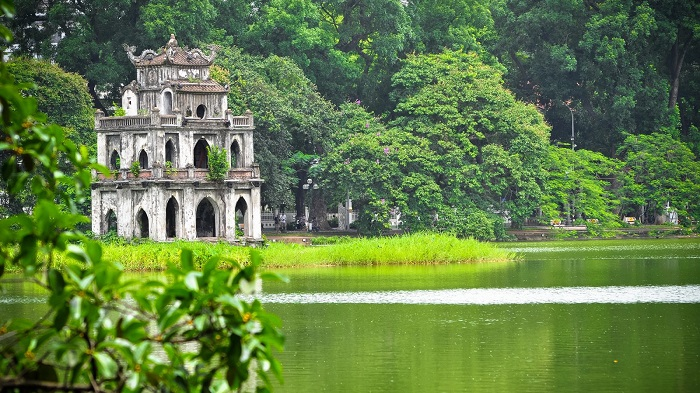
Sunrise: The Lake Awakens
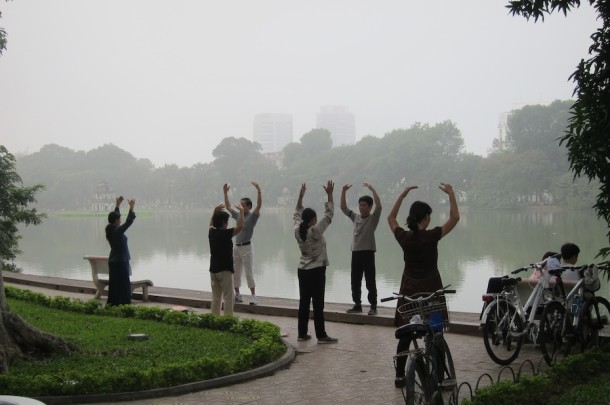
The best time to experience Hoàn Kiếm Lake is before the city fully stirs. Between 5:00 and 6:30 AM, the lake belongs to the early risers, elderly couples practicing tai chi beneath ancient banyan trees, runners tracing the perimeter with quiet determination, and the soft pink light of dawn painting Turtle Tower in hues that no midday sun can replicate.
This is when the lake reveals its contemplative character. Mist often rises from the water’s surface, softening the surrounding French colonial architecture into silhouettes. The morning exercise groups, some practicing synchronized movements, others playing badminton or dancing, offer authentic glimpses of Hanoi’s community spirit before the tourist crowds arrive.
Photography tip: Position yourself on the eastern side of the lake near the Ly Thai To statue garden for the first light hitting Turtle Tower. A tripod is essential for the soft dawn light. The reflection of Ngoc Son Temple in the still morning water creates mirror-like compositions that disappear once the breeze picks up.
Best sunrise spots: The bridge leading to Ngoc Son Temple, the eastern promenade near the Post Office, and the northern end where the lake narrows toward the Old Quarter.
Turtle Tower: The Lake’s Iconic Centerpiece
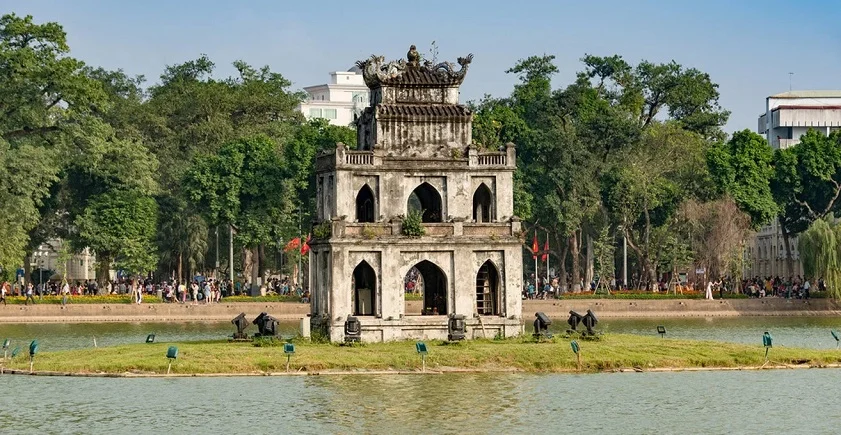
Rising from a small island in the lake’s center, Tháp Rùa (Turtle Tower) stands as the enduring symbol of Hanoi. Built in 1886 on the site of a former temple, the Gothic-style structure honors the legendary turtle that returned the magical sword to the lake’s depths, a story every Vietnamese child knows by heart.
The tower cannot be accessed by foot; its power lies in its isolation. From every angle around the lake, Turtle Tower provides a focal point that changes character throughout the day. Morning light illuminates its western facade. Afternoon sun casts long shadows across the water. Evening brings golden hour warmth that turns the tower into a bronze sculpture against the sky.
Photography tip: The best angles are from the bridge to Ngoc Son Temple (capturing the tower between the bridge’s red pillars), from the western shore near the Ly Thai To statue (for tower framed by willow trees), and from the eastern promenade (for reflections on calm mornings). A telephoto lens allows for intimate shots of the tower’s weathered stone details.
Cultural note: The legend of Hoàn Kiếm – the Lake of the Returned Sword is central to Vietnamese identity. Emperor Lê Lợi supposedly returned a magical sword to the Golden Turtle God here after defeating the Ming dynasty. The tower commemorates this foundational story.
Ngoc Son Temple: The Sacred Island
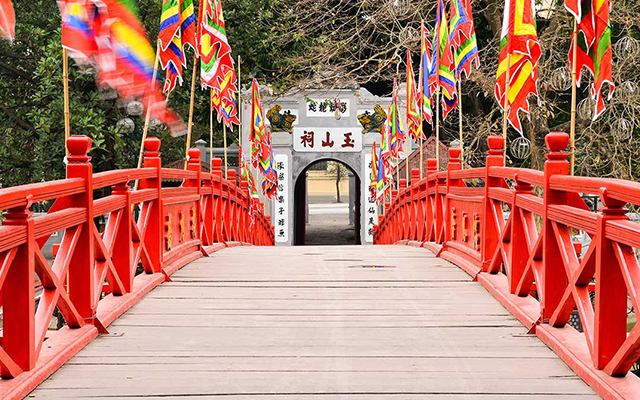
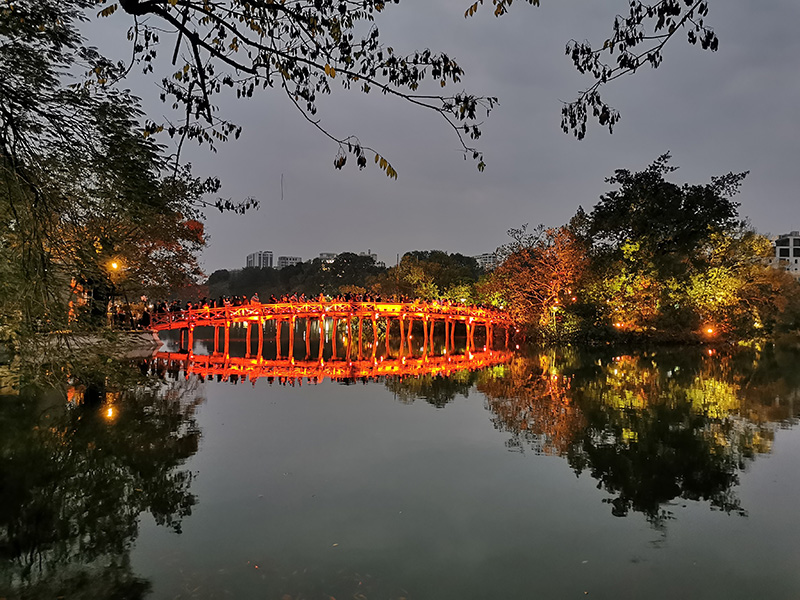
Connected to the shore by the vibrant red Thê Húc Bridge, Ngoc Son Temple (Temple of the Jade Mountain) occupies a small island near the lake’s northern end. The bridge itself is a photographic landmark, its crimson arches contrasting against the lake’s green waters, its curved path symbolizing the journey from the mundane to the sacred.
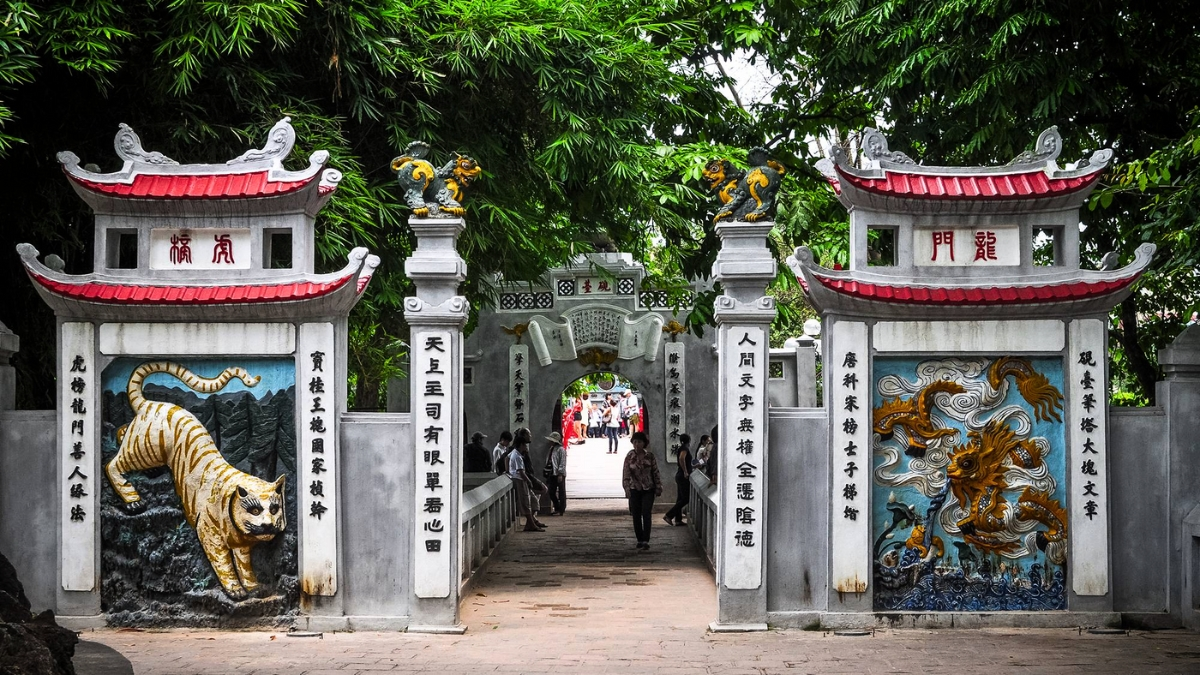
The temple complex honors General Trần Hưng Đạo, the 13th-century hero who defeated Mongol invaders, alongside the scholar Văn Xương and the legendary turtle. Inside, visitors encounter a preserved giant tortoise specimen, a tangible connection to the lake’s living history. The temple grounds also feature Đắc Nguyệt Lâu (Moon Viewing Pavilion), a small structure offering framed views of Turtle Tower across the water.
Photography tip: The Thê Húc Bridge is most photogenic at golden hour (4:30–5:30 PM) when the low sun saturates its red paint. From the bridge itself, looking back toward the shore captures the temple gate framed by hanging lanterns. For a unique composition, shoot the bridge from the western shore using the willow trees as a natural frame.
Practical information: The temple is open daily from 8 AM to 6 PM. A small entrance fee applies. Visit early morning to avoid the mid-day crowds that peak between 10 AM and 2 PM.
The Walking Route: A Complete Circuit
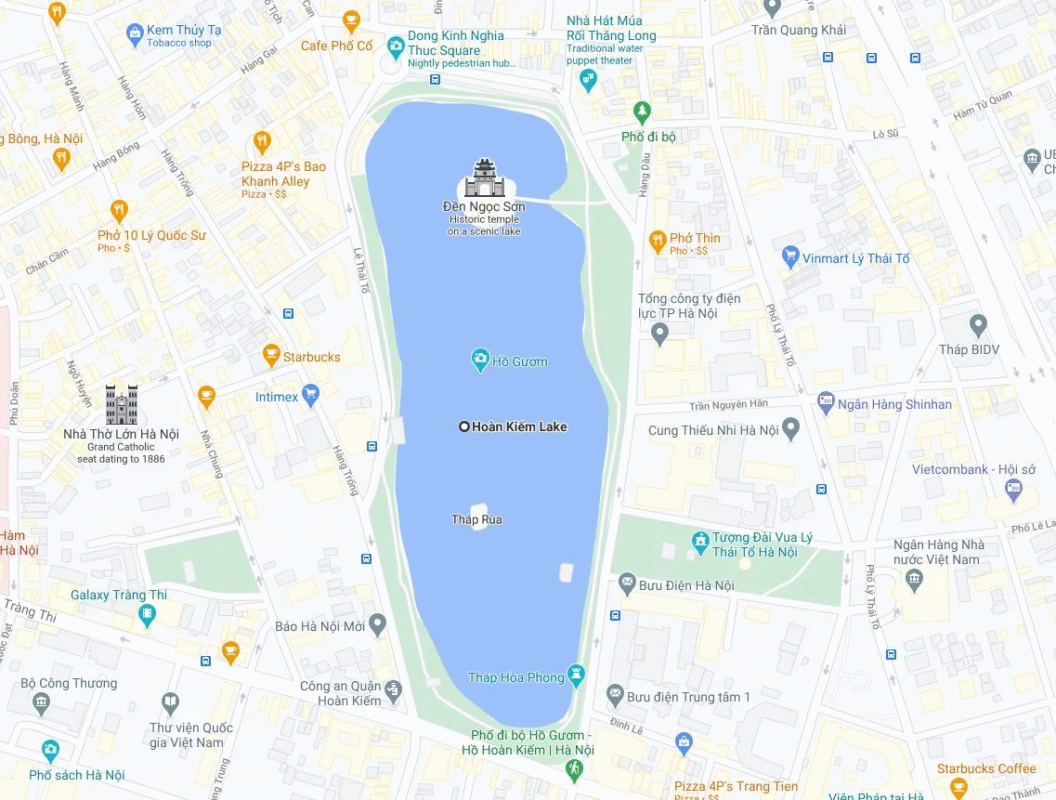
The full loop around Hoàn Kiếm Lake measures approximately 1.8 kilometers, a distance that invites leisurely exploration rather than hurried completion. Here is the ideal route:
Starting point: Begin at the Ly Thai To Statue and Flower Garden on the lake’s western side. This plaza honors the founder of the Ly Dynasty and serves as the city’s symbolic heart.
Southern stretch: Walk south along the western shore, passing the Hanoi Post Office and a row of shaded benches perfect for watching lake life. The path here offers unobstructed views of Turtle Tower.
The southern tip: At the lake’s southern end, cross to the eastern shore. This area is quieter, with fewer vendors and more space for contemplation.
Eastern promenade: Continue north along the eastern side, where willow trees drape toward the water. This stretch offers the best morning light and a view back toward the Old Quarter’s rooftops.
Northern end: Arrive at Ngoc Son Temple and the Thê Húc Bridge. This is the route’s natural climax, the transition from lakeside stroll to sacred island.
Western return: Complete the circuit by walking west along the northern shore, passing through the intersection of Hàng Khay and Đinh Tiên Hoàng Streets, where the energy of the Old Quarter begins to assert itself.
Photography tip: Shoot the circuit in stages rather than attempting to capture everything at once. Sunrise suits the eastern side. Late afternoon suits the western side. The southern end offers solitude; the northern end offers architectural drama.
The French Quarter: Architecture Beyond the Lake
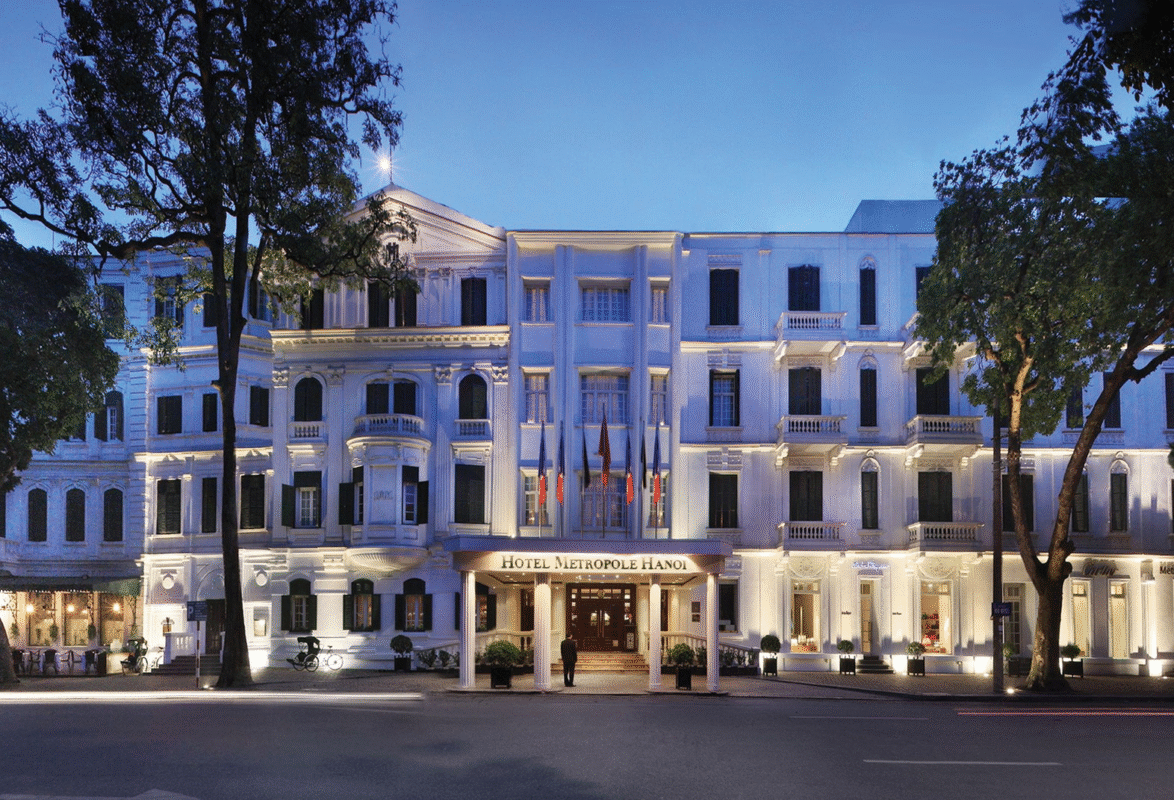
Just south of Hoàn Kiếm Lake lies the French Quarter, a district of wide boulevards, colonial villas, and shaded avenues that contrasts dramatically with the labyrinthine Old Quarter. The lake serves as the gateway to this more spacious, more elegant Hanoi.
Tràng Tiền Street: Leading from the lake’s southeastern corner, Tràng Tiền Street is lined with colonial-era buildings, including the iconic Hanoi Opera House, a masterpiece of French Renaissance architecture completed in 1911. The building is most striking at night when floodlights illuminate its arched windows and domed roof.
Tràng Thi Street: Parallel to Tràng Tiền, this boulevard features grand government buildings and former hotels from the colonial period. The architecture here reflects French ambitions for Hanoi as the “Paris of the East”, wide streets, symmetrical facades, and wrought-iron balconies.
Photography tip: The French Quarter is best photographed in the late afternoon when the low sun accentuates architectural details. The Opera House faces west, ideal for golden hour light. For the grand boulevards, use a wide-angle lens to capture the sense of space and symmetry.
Walking extension: From the lake’s southern tip, walk south along Tràng Tiền Street for five minutes to reach the Opera House. Continue to the Sofitel Legend Metropole Hotel, a colonial landmark that has hosted writers, statesmen, and travelers for over a century.
Golden Hour: The Lake at Dusk
As sunset approaches, Hoàn Kiếm Lake transforms. The harsh midday light softens. Turtle Tower glows amber. The Thê Húc Bridge deepens to crimson. And the lake’s perimeter fills with Hanoians enjoying the brief window of cooler temperatures before evening.
The hour before sunset (4:00–5:30 PM depending on season) offers the most dynamic lighting conditions. Shadows lengthen, reflections intensify, and the city’s pace shifts from frantic to contemplative. This is the time for portrait photography, for capturing the interaction between people and place, for understanding why this lake has remained Hanoi’s heart for a thousand years.
Photography tip: Position yourself on the western shore for the sun setting behind Turtle Tower. The Ly Thai To garden offers elevated perspectives. For the bridge, shoot from the eastern side looking west—the red pillars glow in the final light.
After sunset: Stay until the lights come on. Turtle Tower is illuminated after dark, creating reflections that transform the lake into something entirely different, romantic, mysterious, ancient.
Practical Guide
Best times to visit:
- Sunrise (5:00–6:30 AM): Peaceful, contemplative, authentic
- Late afternoon (3:30–5:30 PM): Golden light, vibrant atmosphere
- Evening (7:00–9:00 PM): Illuminated landmarks, cooler temperatures
- Avoid midday (10:00 AM–2:00 PM): Harsh light, heavy crowds, intense heat
Photography essentials:
- Wide-angle lens for architecture and landscape shots
- Telephoto lens for Turtle Tower details and candid portraits
- Tripod for sunrise, sunset, and night photography
- Polarizing filter to manage reflections on the water
What to bring:
- Comfortable walking shoes (the circuit is paved but requires full attention)
- Water (vendors around the lake charge premium prices)
- Patience (the lake is Hanoi’s most popular destination; crowds are inevitable)
Etiquette:
- The lake is a place of daily life, not merely a tourist attraction. Respect those exercising, praying, or simply sitting.
- Early morning photography should avoid disrupting tai chi groups.
- Ngoc Son Temple requires modest attire; shoulders and knees should be covered.
Hoàn Kiếm Lake is not merely a destination to check off an itinerary. It is a place to return to, at dawn for solitude, at dusk for romance, at any hour for the simple act of walking beside water that has witnessed Hanoi’s entire history. Walk its circuit once to see the landmarks. Walk it again to understand why this lake remains the city’s soul.
