
Nestled among the majestic mountains of Northwest Vietnam, Sâu Chua Village is one of the most breathtaking cloud-hunting destinations, still preserving its pristine beauty in Sapa. Located about 8 kilometers from Sapa town, this village has not yet experienced heavy tourism development, offering an authentic experience close to nature and local culture. In recent years, Sâu Chua has gradually become a name mentioned more frequently in Sapa exploration itineraries for travelers who seek tranquility and wish to discover unique landscapes.
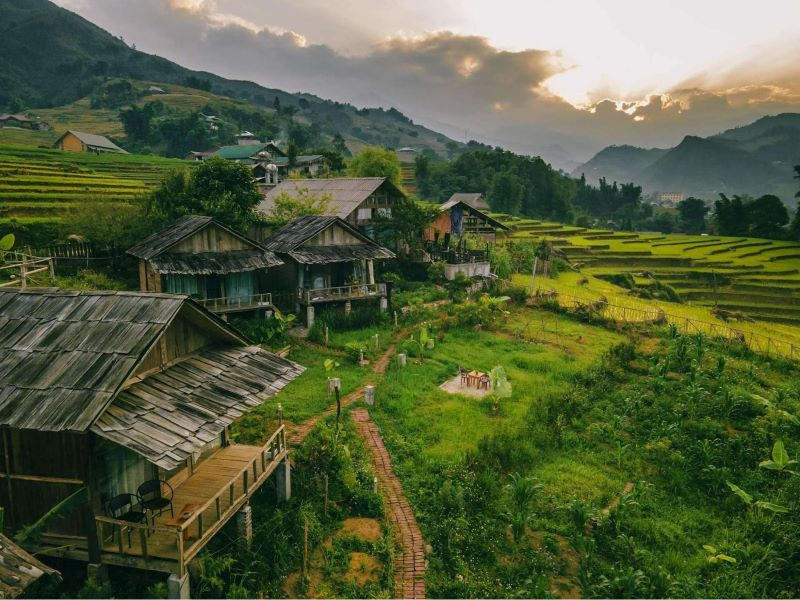
Sâu Chua Village – Photo: Various sources
To reach Sâu Chua Village, you start from Sapa town center, following Điện Biên Phủ Road toward Lào Cai city. After about 6 kilometers, you will reach Cầu 32. Here, you can easily ask the locals for directions into the village. They will warmly guide you to this “Cinderella of Northwest Vietnam” in the quickest way possible. The road leading into the village has some steep mountain passes, but in return, it offers breathtaking natural scenery, unfolding before visitors are lush green terraced rice fields, small villages appearing through the mist, and a sense of peace like no other.
Sâu Chua Village is a fairly new tourist destination in Sapa, attracting visitors with its pristine beauty.
Sâu Chua Village is not only a tourist destination but also a place that preserves the traditional cultural values of the H’Mông people. Here, visitors have the opportunity to learn about daily life, unique customs and traditions, and enjoy the local specialties of the indigenous people. The simplicity and sincerity of the Sâu Chua villagers will surely leave a deep impression on every traveler.
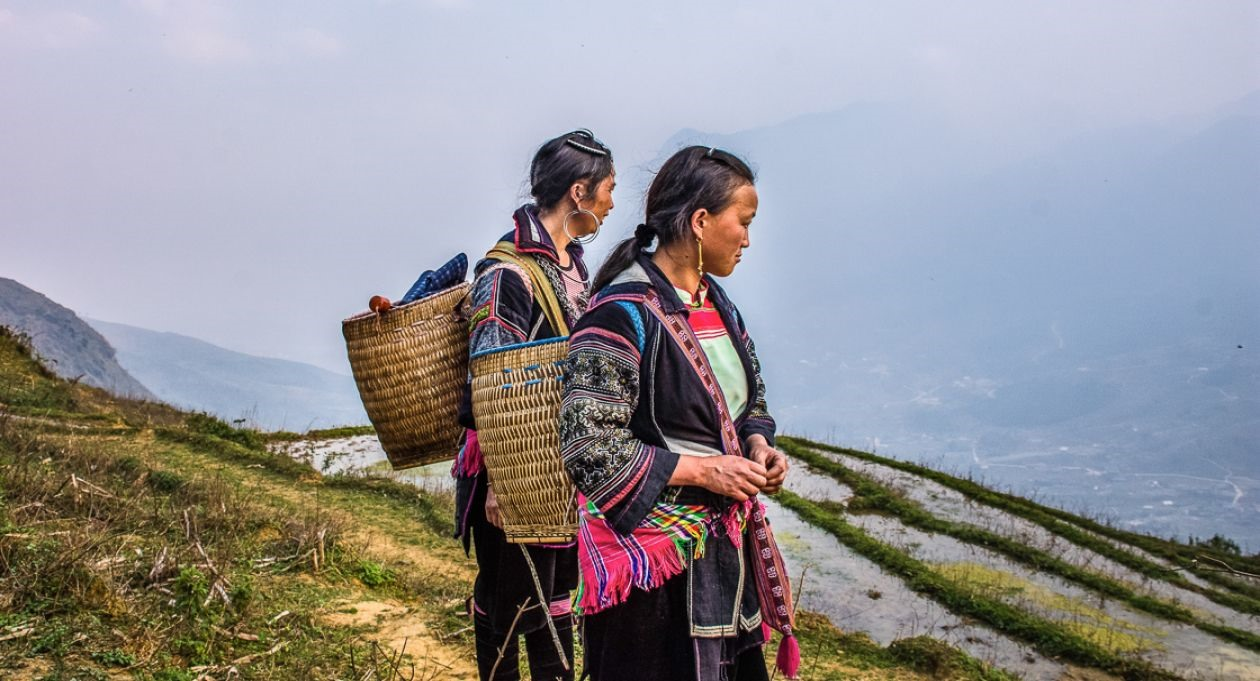
Lý Thị Cơ (front) is a part-time tour guide from the Black H’Mông ethnic group. – Photo: Vietnam Travel
If you are looking for a place to escape the noise, dust, and work pressures of the city, Sâu Chua is the ideal destination. Here, there is no blaring sound of car horns, no hustle and bustle, only the sound of birds singing all day and the innocent laughter of children along every path. The people of Sâu Chua Village, primarily H’Mông ethnic minority, are renowned for their hospitality and sincerity. They live a simple life, close to nature.
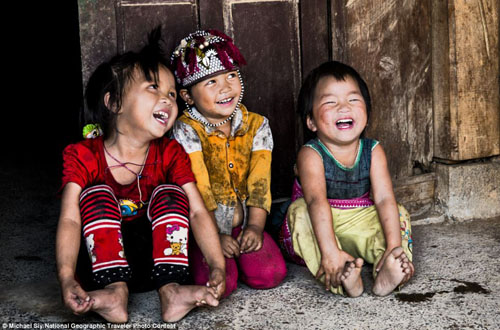
Sapa Childre. – Photo: Michael Siy
You can bring some candies to give to the children in the village, especially near the elementary school. Their radiant smiles and clear eyes will be priceless gifts. Unlike many developed tourist areas, the children in Sâu Chua do not solicit visitors to buy things; they are simply innocent kids curious about strangers. This simplicity creates Sâu Chua’s unique charm, making many want to stay here to live peaceful days, completely detached from the outside world.
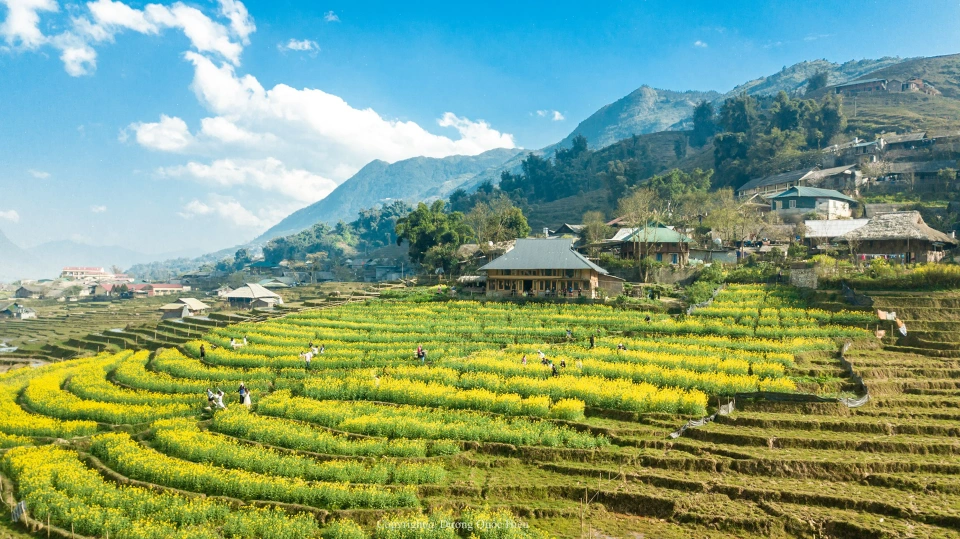
Mustard flowers bloom throughout Sâu Chua Village in spring.
Spring Bursting with Peach and Mustard Flower Colors
If you visit Sâu Chua in spring, you will witness a vibrant and lively natural scene. The people of Northwest Vietnam have a tradition of planting peach trees around their homes for beauty and as an additional source of income. Therefore, when spring arrives, the entire Sâu Chua Village is draped in a brilliant pink coat of peach blossoms, interwoven with the pure white of plum blossoms. This scene is breathtakingly beautiful, creating a romantic and poetic atmosphere.
Additionally, the bright yellow mustard flower fields are a special highlight of Sâu Chua during this season. The mustard flower carpets stretch endlessly, blending with the green of the mountains and forests and the pink and white of peach and plum blossoms, creating a stunning landscape that captures every gaze. This is the perfect time to capture memorable moments and enjoy the fresh, vibrant atmosphere of the Northwest spring.
The “Kingdom” of Kohlrabi Seed
Sâu Chua Village is also known as the “kingdom” of kohlrabi seed. Thanks to its fertile soil and cool year-round climate, kohlrabi plants here thrive, producing seed yields and quality that are unmatched anywhere else in Sapa. The Sâu Chua Cooperative of the H’Mông people supplies about three tons of purebred kohlrabi seeds to the country each year, making a significant contribution to local agriculture.
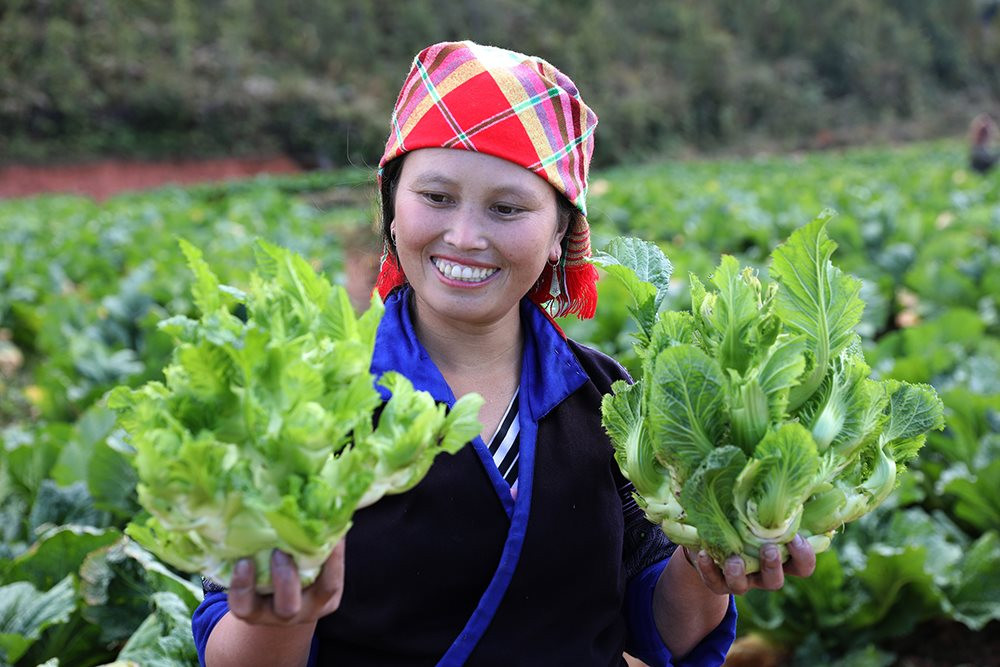
A farmer with her boons – Photo: Various sources.
Visiting Sâu Chua, you will see lush green kohlrabi fields stretching out, creating a peaceful and vibrant rural scene. This is not only a unique agricultural cultural feature but also a testament to the hard work and diligence of the local people. You can learn about the process of growing and harvesting kohlrabi seeds and even buy some to take home as gifts for family and friends.
Sapa Ancient Rose Hill – A Romantic Paradise
Another unmissable destination in Sâu Chua is the Sapa Ancient Rose Hill, a true “paradise” for flower lovers. Covering over 8 hectares, this place is home to 415 rose varieties, including primitive ancient roses native to Sapa and many famous imported rose varieties. Notably, up to 200 ancient Sapa rose bushes are blooming vibrantly, creating an incredibly romantic and captivating landscape.
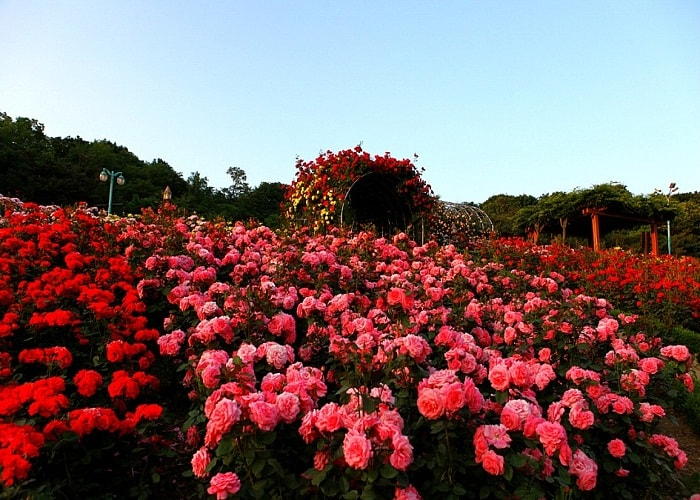
This largest ancient rose hill in Sapa is where visitors can immerse themselves in the world of flowers, enjoy the gentle fragrance, and admire the poetic “mountain and water” beauty of nature. It is also an ideal spot for couples to take wedding photos, capturing happy moments in a space filled with floral scents. In spring, hundreds of Hoàng Liên azalea trees also bloom, adding fresh beauty to the garden.
Local Cuisine and Cultural Experiences
When visiting Sâu Chua Village, travelers not only enjoy the scenery but also have the opportunity to taste the specialties of the H’Mông people. The dishes here are often prepared from fresh, natural ingredients, carrying the authentic flavors of the mountains and forests. You can try salmon hotpot, thắng cố (traditional H’Mông stew), grilled armpit pork, or fresh wild vegetables. Simple yet cozy meals by the warm fireplace will be unforgettable experiences.
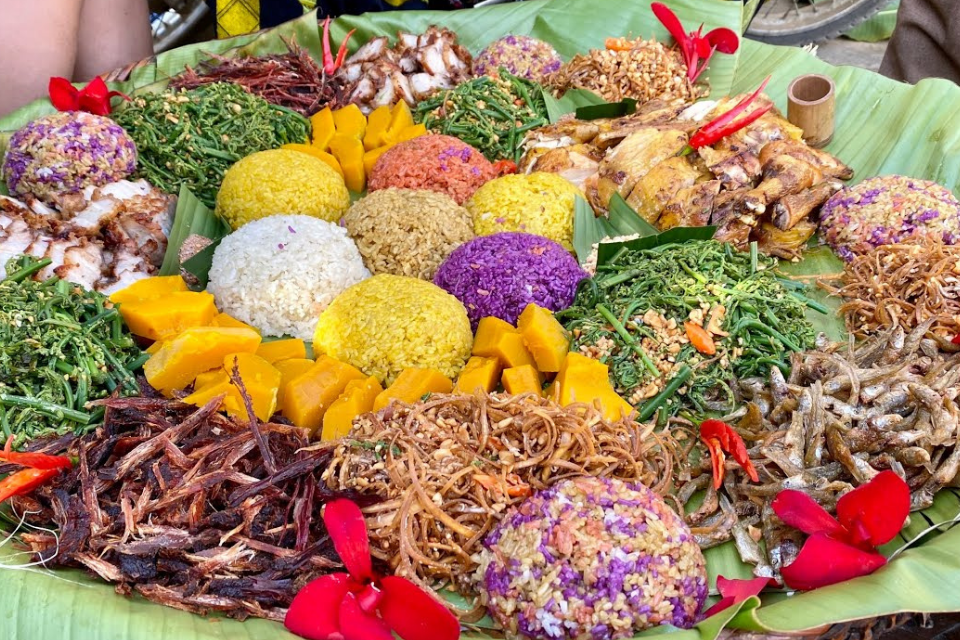
Additionally, do not miss the chance to participate in the cultural activities of the local people. You can visit small markets where fresh agricultural products and traditional handicrafts are sold. If lucky, you may even be invited to join traditional festivals, dancing and singing with the locals, gaining a deeper understanding of their rich spiritual life.
